What a drop is
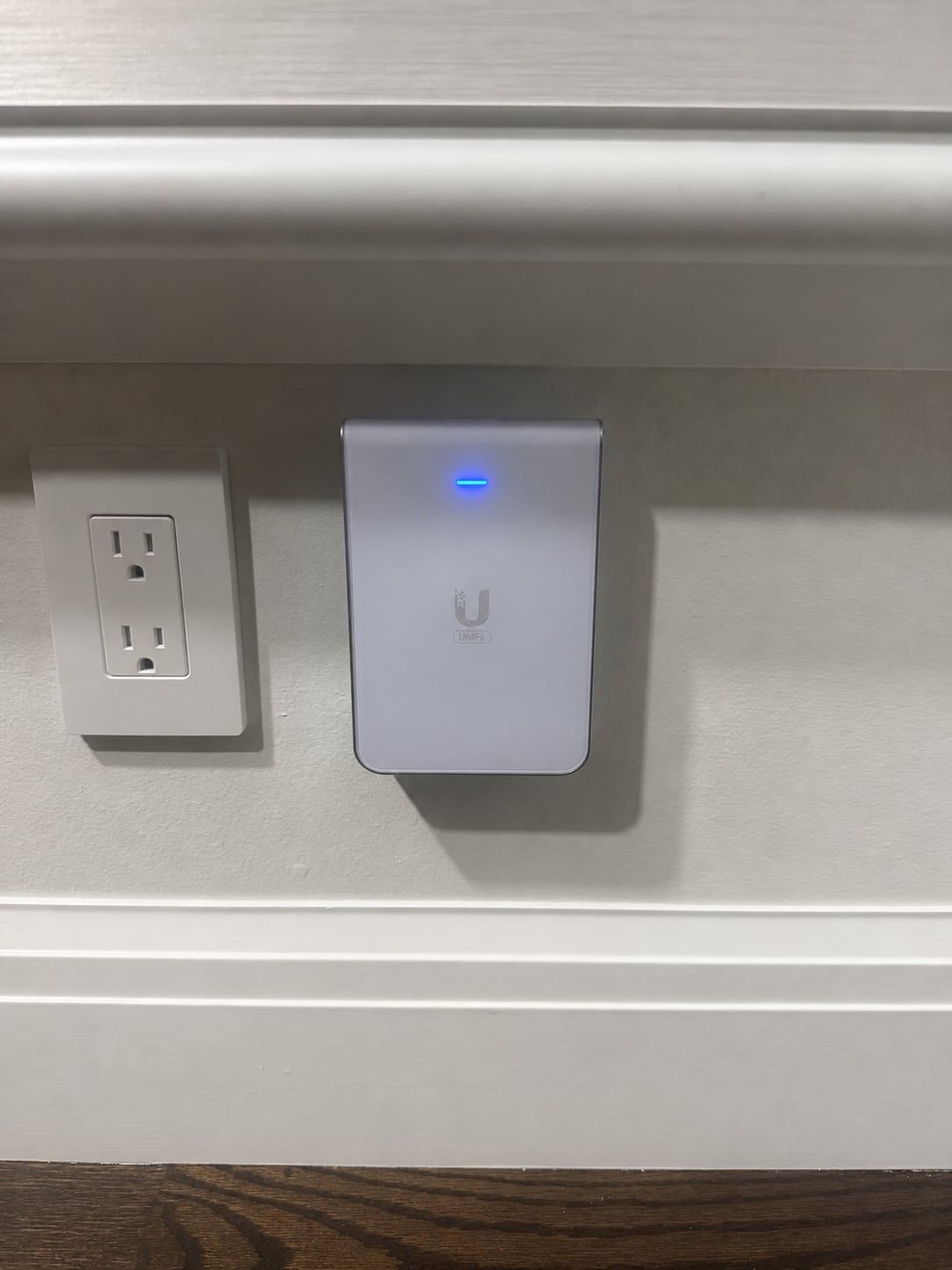
A drop is one cable run from the network closet to one spot: a desk, a printer, a camera, an access point, or a TV. Each one ends in a jack on one side and a patch panel in the closet on the other. Planning drops means thinking about every device that needs a connection now, plus a few extra for growth.
Copper or fiber
Copper network cable runs from the closet to desks and devices and can carry power to cameras and access points, but it has a length limit of about 300 feet. Fiber carries data much farther and faster, so it connects closets on different floors, separate buildings, and anything beyond copper’s reach. Most buildings use both.
Cable rated for the space
Cable that runs above a drop ceiling where air moves through has to be a fire-rated type made for that space, and cable running between floors has its own rating. We use the right cable for each part of the building.
Racks and IT closets
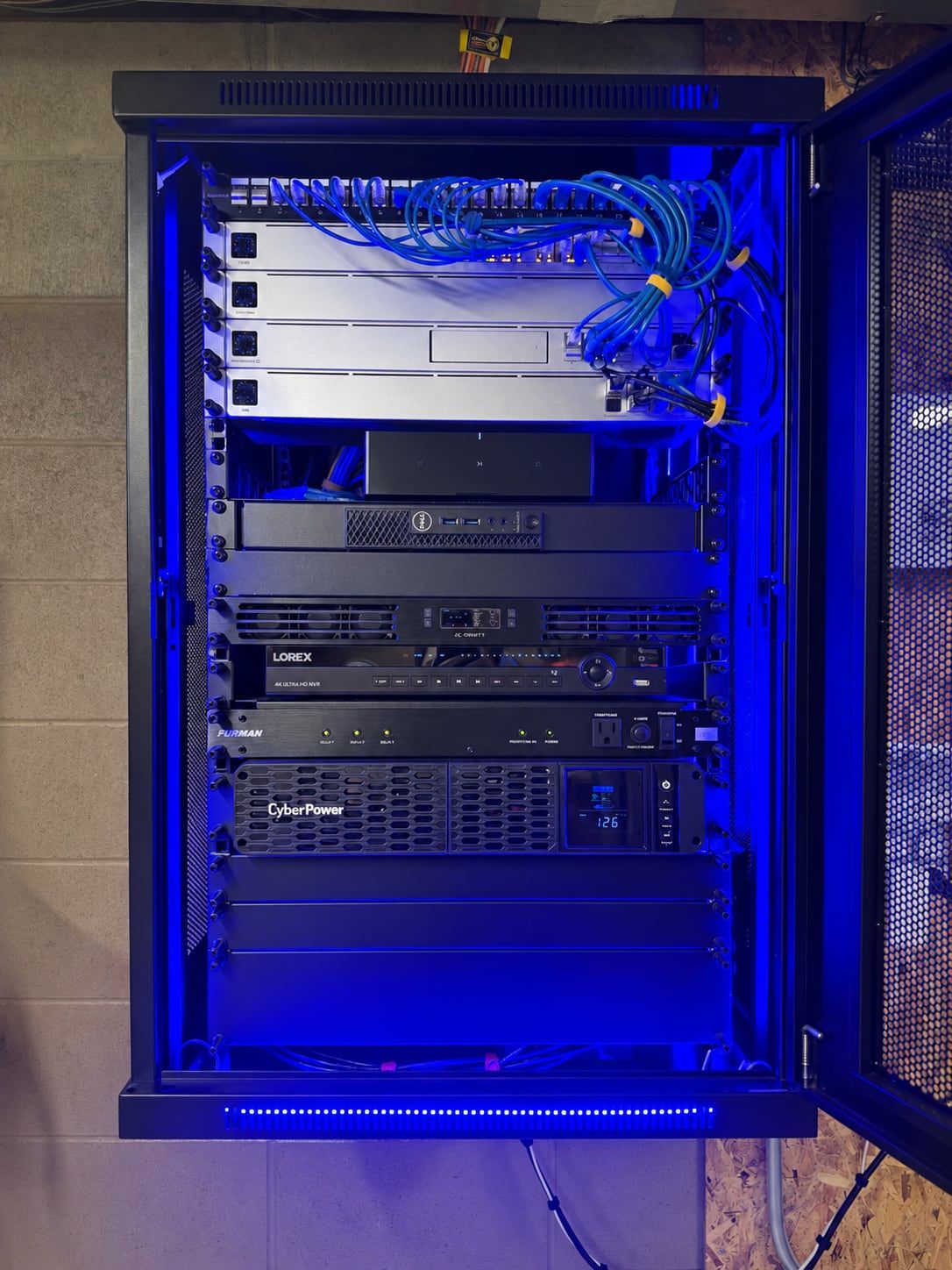
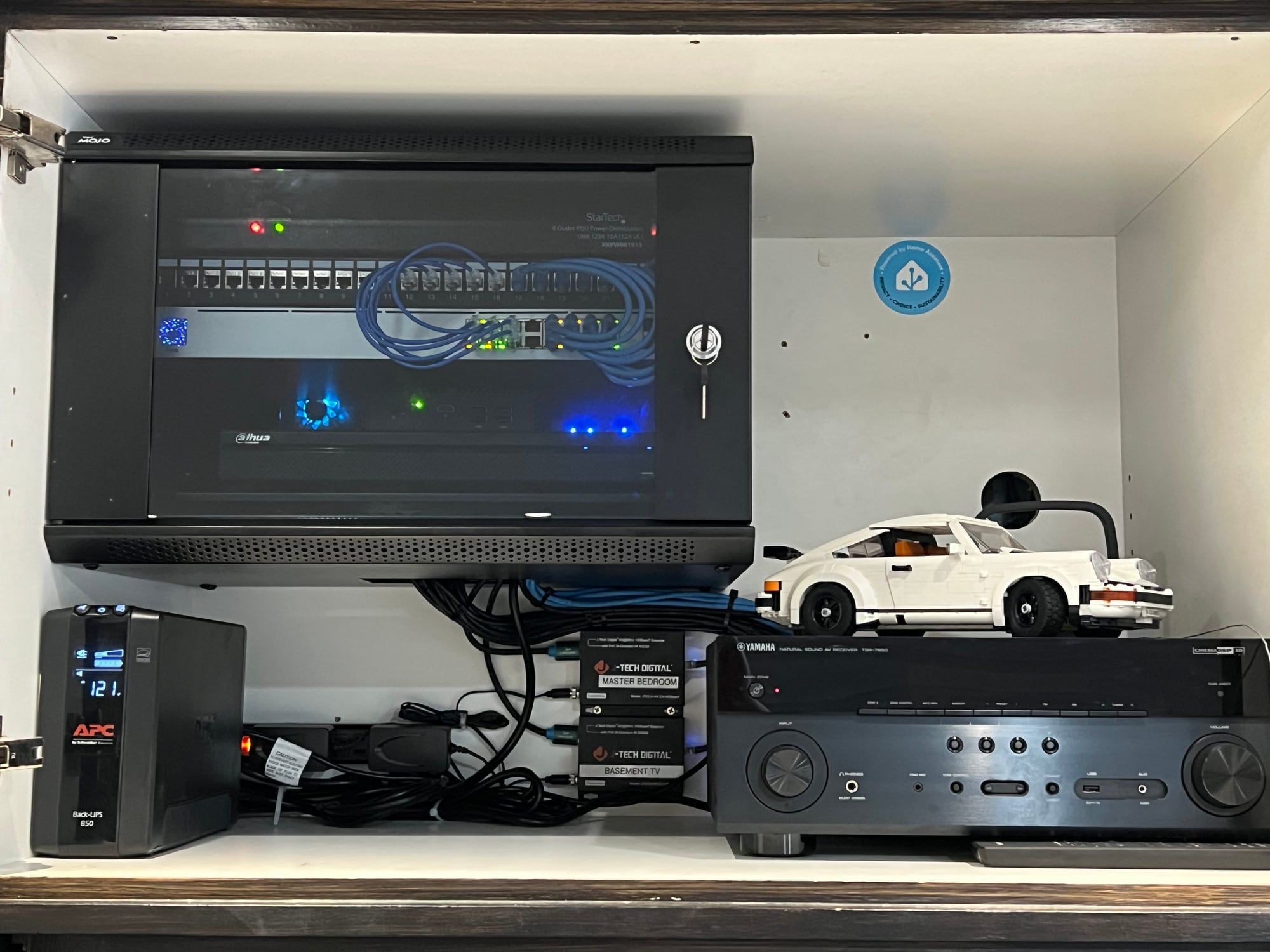
Every cable ends in a rack with patch panels, switches, and room to grow, with cables run neatly and supported along the way. A clean closet makes problems quicker to find and changes quicker to make. If yours is a rat’s nest, we rebuild it so every cable has a place.
Testing every run
Every cable is tested from end to end with a cable tester before we leave, and we hand over the results. A bad run found on install day is easy to fix. One found after the ceiling closes isn’t.
Build-outs, adds, moves, and changes
On a new space or build-out, we work with your contractor so cable goes in before the ceilings and walls close. In a space you already use, we add drops for new desks, rooms, cameras, and access points, and move or remove old ones, without leaving loose cable behind.