Choosing a TV
Size comes first. The farther you sit from the screen, the bigger it should be, and most people who go smaller wish they hadn’t. We look at the room with you and suggest a size that fits the wall and the seating.
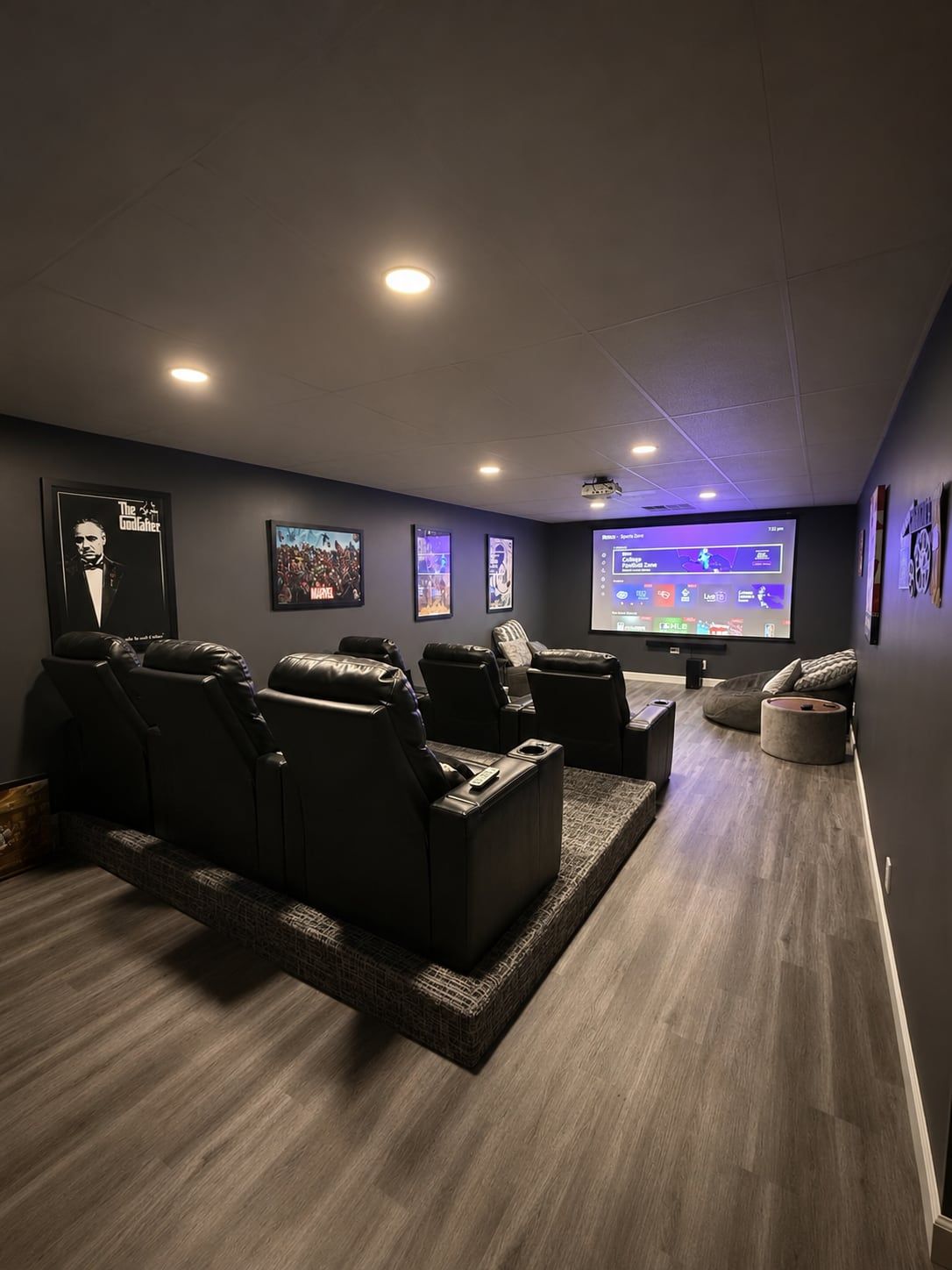
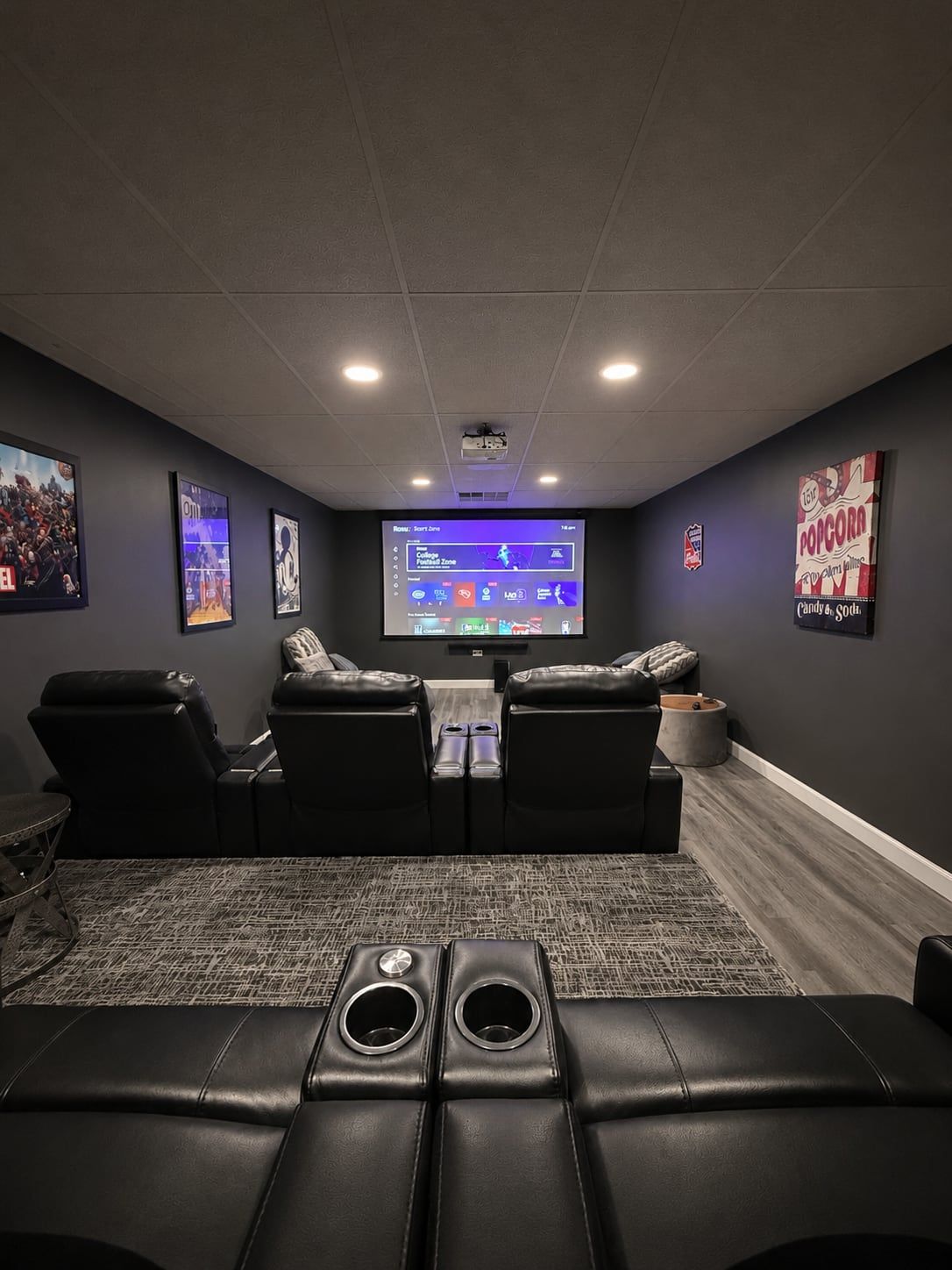
Light matters too. A sunny room needs a brighter screen that holds up to glare, while a basement or media room can use a screen made for dark rooms and deep blacks. We help you pick a TV that fits how and where you watch, then connect your streaming, cable, and game console so it all works together.
Picture quality: 4K, HDR, and screen types
4K means a sharper picture that stays clear even on a big screen, and it’s standard on new TVs. Most streaming shows and movies come in 4K, as long as your internet can keep up. HDR makes bright scenes pop while keeping detail in the dark ones, so the picture looks more like real life.
LED screens get very bright, so they’re great for sunny rooms and daytime sports. OLED screens have deep, true blacks, so they look best for movies in a darker room. For sports and gaming, a smooth, fast picture keeps quick motion from blurring. We help you pick the one that fits how you watch.
TV mounting
There are three kinds of mounts. A flat mount holds the TV close to the wall, which looks cleanest. A tilting mount angles the screen down, which helps when the TV goes up high, like over a fireplace. A full-motion mount pulls out and swivels, so you can aim it toward the kitchen or a corner seat.
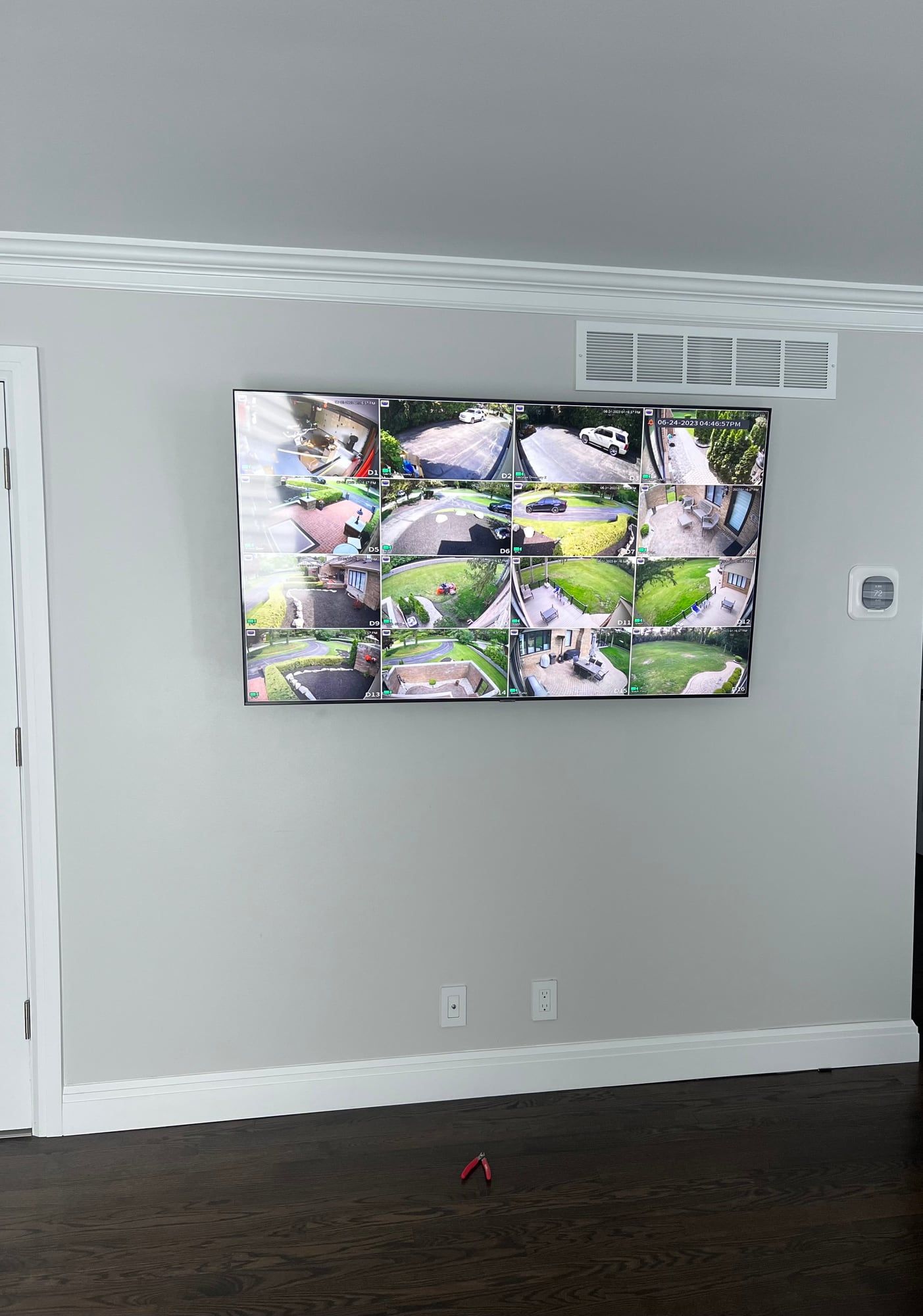
Height matters too. For a living room, the middle of the screen should sit close to eye level when you’re seated. If you want the cords hidden inside the wall, that takes a power outlet behind the TV, which is electrical work, so we plan it with an electrician.
Whole-home audio
Whole-home audio puts speakers in the rooms you pick and splits the house into zones. You can play the same music everywhere for a party, or something different in the kitchen than in the office, and set the volume for each room from your phone. Speakers can go in the ceiling, in the wall, or on a shelf. Ceiling speakers spread sound evenly and stay out of sight, which is why most people pick them.
Outdoor audio
Outdoor speakers are made for rain, snow, and sun. Some mount under the eaves, others look like rocks or sit low in the landscaping, and a subwoofer can be buried in a garden bed for fuller sound. Outside, several speakers at a lower volume sound better than two loud ones, and they keep the music in your yard instead of your neighbor’s.
Surround sound
TV speakers are small and thin. A soundbar is the simplest upgrade: one speaker under the TV, often with a subwoofer. True surround sound puts speakers in front, beside, and behind where you sit, so sound moves around the room the way the movie was made. For a room you watch movies in every week, that difference is easy to hear.