Landscape lighting
Landscape lighting runs on low voltage. A transformer plugs in near the house, and a low-voltage cable runs through the beds to each light. It’s safe around kids, pets, and gardening, and lights can be moved as plants grow. The lights themselves are LED, use little power, and last for years.
Kinds of outdoor lights
Uplights sit in the ground or on a stake and shine up on trees, columns, and the front of the house. Path lights light walkways and edges so people can see where they’re stepping. Wash lights spread soft light across a wall or hedge. Step and deck lights sit in stairs and railings. Most homes use a few of each.
Ways to light a home
How a light is aimed changes what you see. Lighting a stone wall from close to its base shows off the texture. Lighting a tree from below makes it stand out against the dark, and lighting from up in the tree casts soft shadows on the lawn like moonlight. The goal is to light a few things well, not everything at once.
Colors of light
The lower the number, the warmer the light. 2700K is warm and golden, like a living room lamp, and suits most homes. 3000K is a little whiter. 4000K is a cool white, like moonlight, and looks great on trees. Color-changing lights can do any color for the holidays.
Indoor design lighting
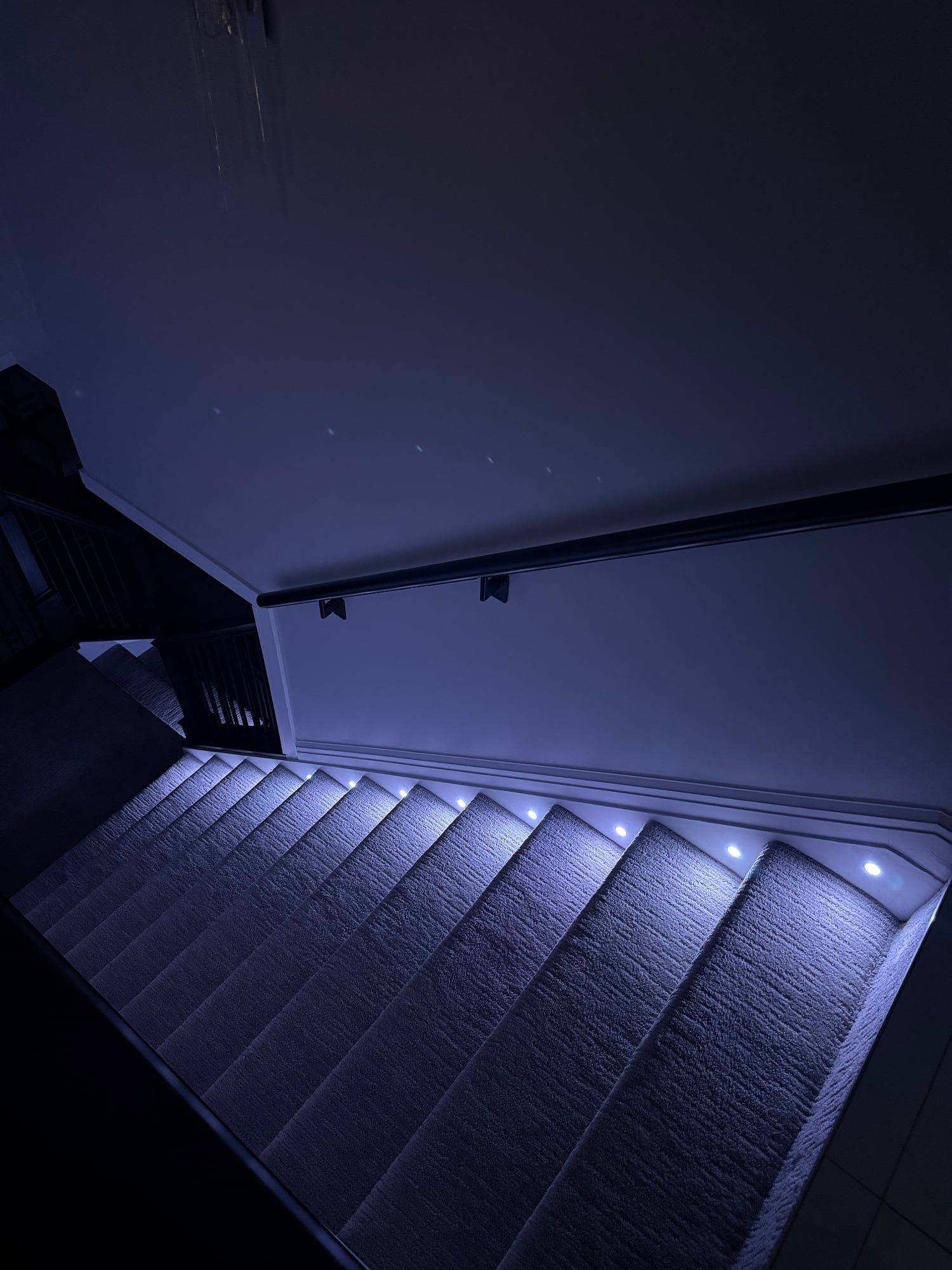
Design lighting is light you notice, but don’t see where it comes from. Thin LED strips go above cabinets, under them, inside coves in the ceiling, under the toe-kick of an island, and along stairs. Under-cabinet lights make the counter easier to work on, stair lights make steps safe at night, and cove lighting makes a room feel bigger and softer. It all works with dimmers.
Planning lighting for a new build or remodel
It’s much easier to plan lighting before the walls close. We mark where under-cabinet, stair, and accent lights will go and run the wiring while the walls are open. Outside, we plan the landscape lighting before the driveway and walkways go in, so every garden bed can be lit later without cutting concrete.
When the lights come on
A timer that follows sunset turns the lights on at dusk all year, so you don’t have to reset it when the days get shorter, and turns them off at the time you choose. You can also control them from your phone or tie them into a smart home system.