What structured cabling is
Structured cabling means running cables from rooms around the house back to one central panel, usually in the basement or a utility closet. Your internet comes into that panel and goes out to every jack, access point, and camera from there. It’s the backbone that makes Wi-Fi, streaming, and cameras work well.
Kinds of cable
Network cable is the one most homes need. It carries internet to TVs, computers, and access points, and can also carry power to cameras and access points. Coax is the round cable used for cable TV and antennas. Fiber carries data over long distances and is mostly used outside the home or between buildings. We run the right cable for each job, with a little extra so the house is ready for what comes next.
Where jacks should go
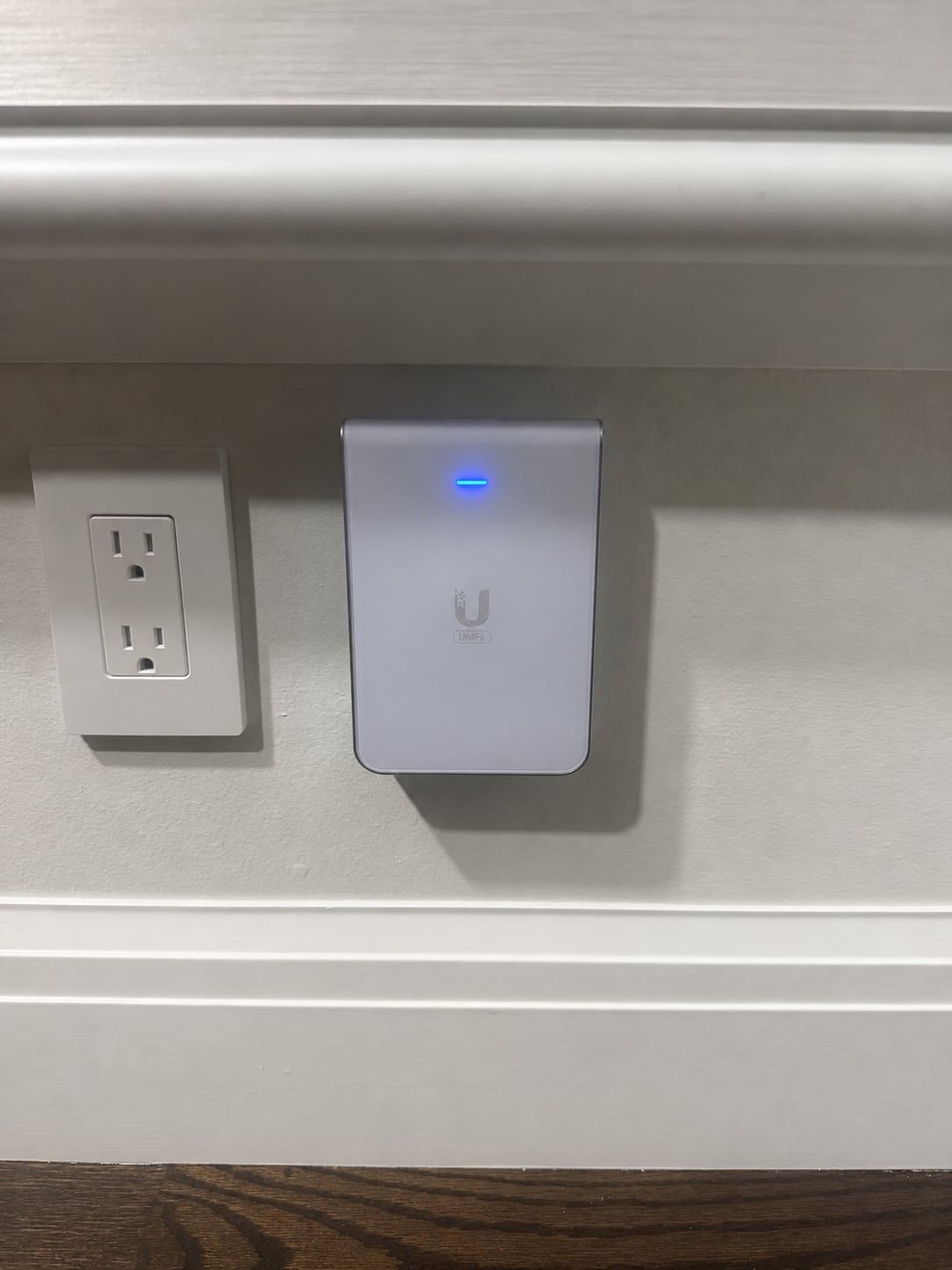
Think about where things sit and stay: behind every TV, at the home office desk, by the game console, and in the ceiling on each floor for an access point. Outside, a cable for each camera spot. It’s cheaper to add a few extra runs now than to come back for one later.
Wiring a finished home
In a finished home, we fish cables through the walls from the basement or attic whenever we can. Sometimes a wall needs an opening to get a cable through, like where there’s a beam or a fire block in the way. When that happens, we tell you first and keep it as small as we can.
New builds and remodels
The easiest time to wire a house is before the drywall goes up. We run cables to every room you’ll want them in, plus empty pipe to key spots so new cable can be pulled later without opening walls.
The central panel
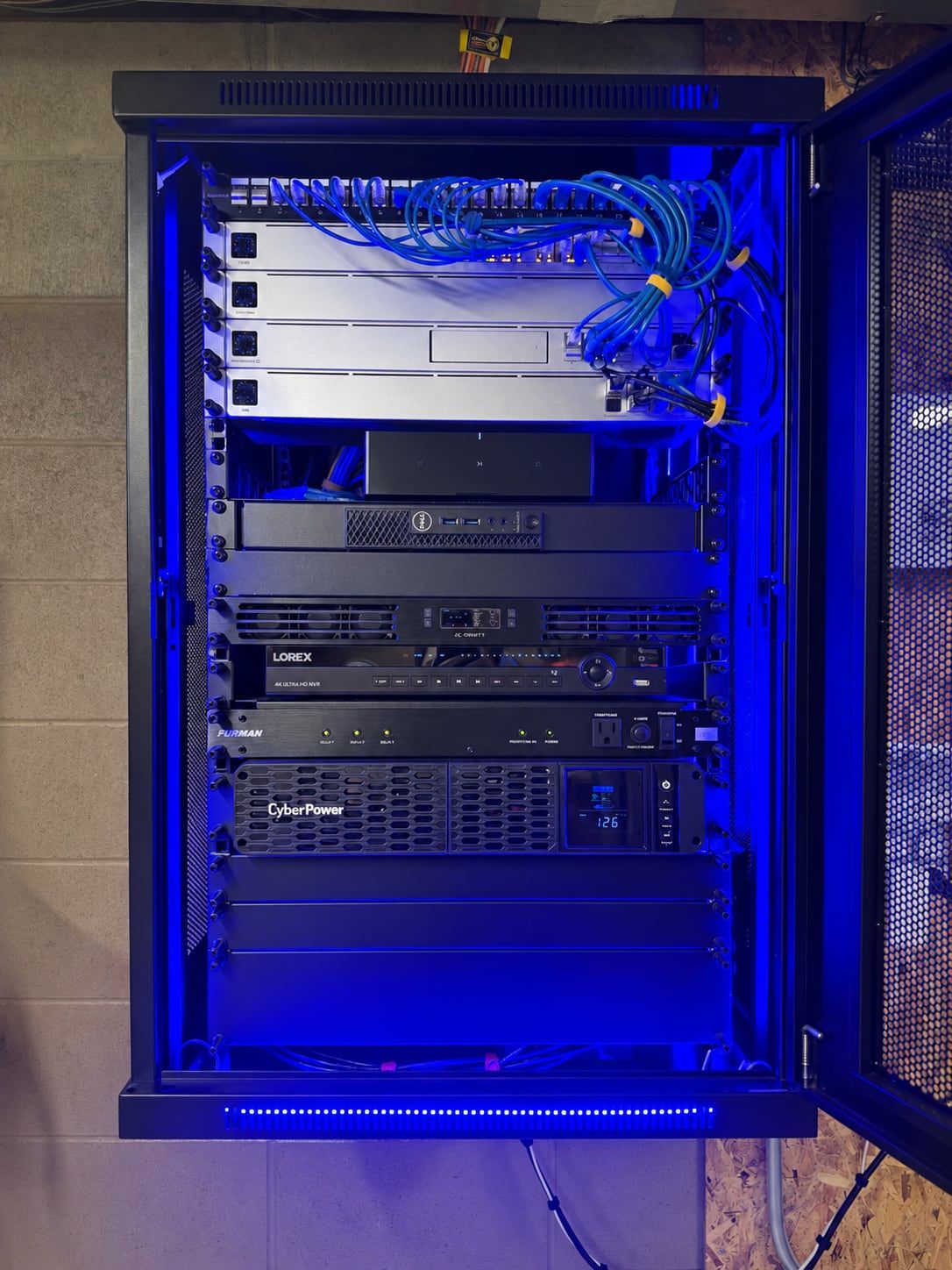
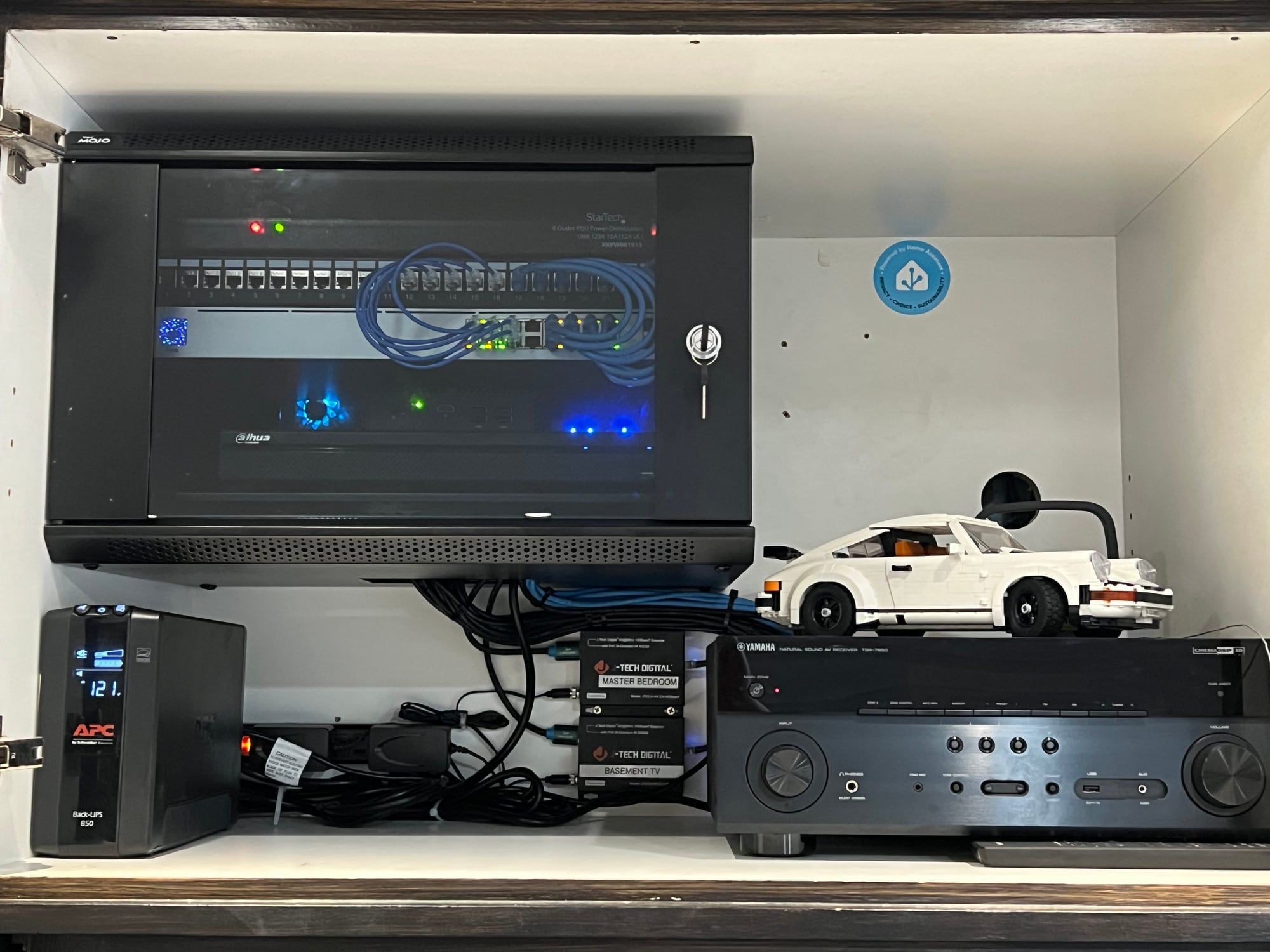
Every cable ends at a panel where your modem, router, and network gear live, neat and easy to work on. If yours is a tangle of cables, adapters, and boxes stacked on the floor, we rebuild it into a clean panel that makes sense. Every cable is tested before we call it done.